

Creating a space that actually works for you is a lot harder than just buying a nice desk and a comfortable chair. You can spend thousands on ergonomic setups and still find yourself staring at your monitor at 2 PM. You feel like the walls are slowly sucking the life out of you.
This is a common frustration for anyone working in a high-density city. We often talk about burnout as a result of a heavy workload or a toxic boss. However, sometimes the work is actually going fine and your team is great.
You still feel physically and mentally depleted the moment you step into the room.
If this sounds familiar, the issue usually isn’t your work ethic. It is the environment. Most modern workspaces prioritize maximum capacity over human focus.
This is where the practical application of office feng shui comes into play. It is not about placing “lucky” charms or following ancient rituals. It is about spatial psychology. The physical layout of a room dictates your stress levels and your ability to think clearly.
Why Your Environment Impacts Your Productivity
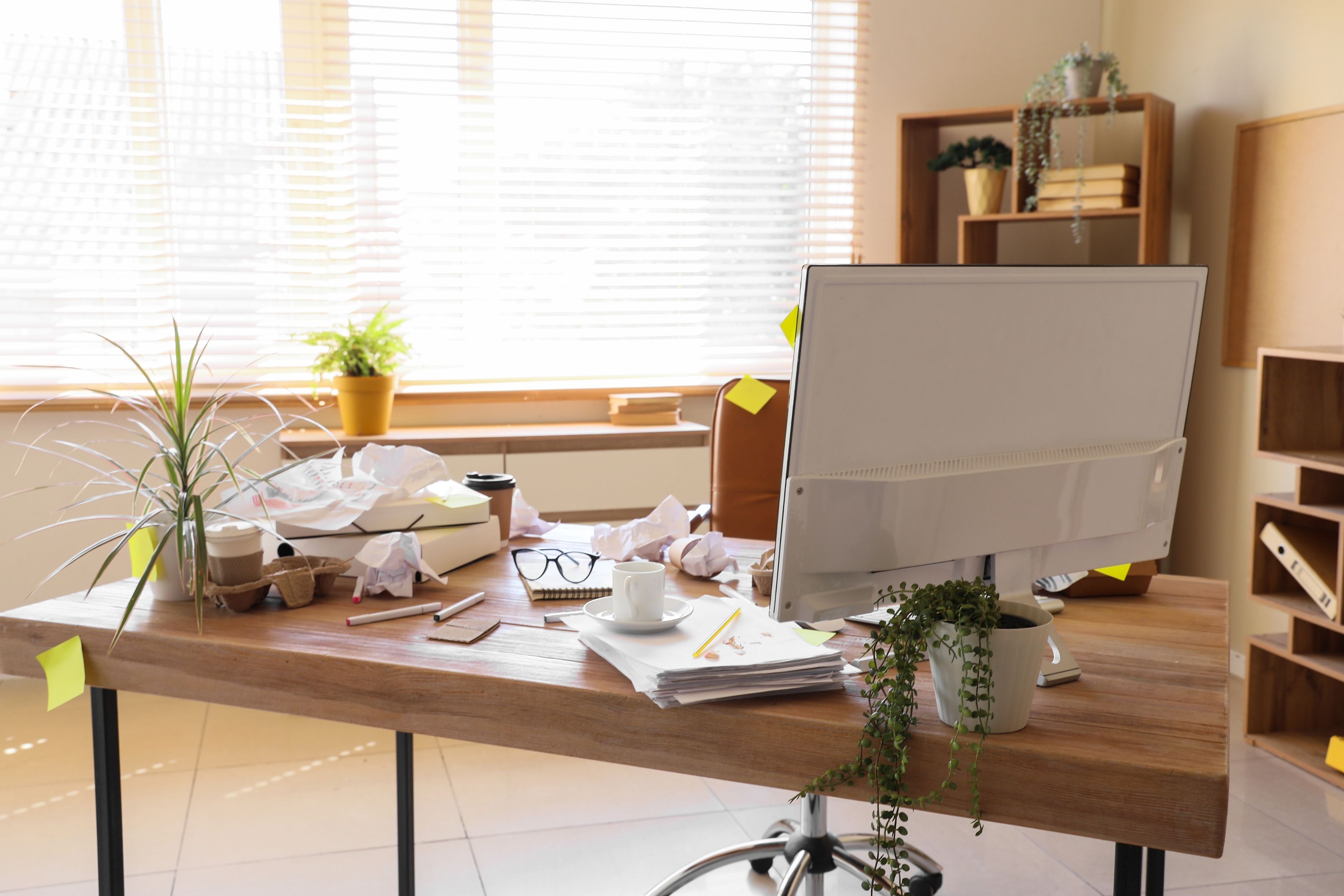
Most of us treat our offices as static boxes. In reality, your brain constantly scans your surroundings for threats and distractions. A poorly laid out room forces your nervous system to stay on high alert.
This is why a modern geomancer acts more like a site analyst. They look for pressure points where a room feels uncomfortable. These are the spots where the flow is blocked. The layout goes against natural human behavior.
When you understand these principles, you see that “tiredness” is often environmental fatigue. If your back is to a door, your brain uses power to monitor that blind spot.
If you face a blank wall with no depth of field, your mind feels trapped. Over an eight-hour day, these tiny micro-stressors add up. You head home exhausted because your environment worked against you the whole time.
Mastering Your Desk Layout with Office Feng Shui
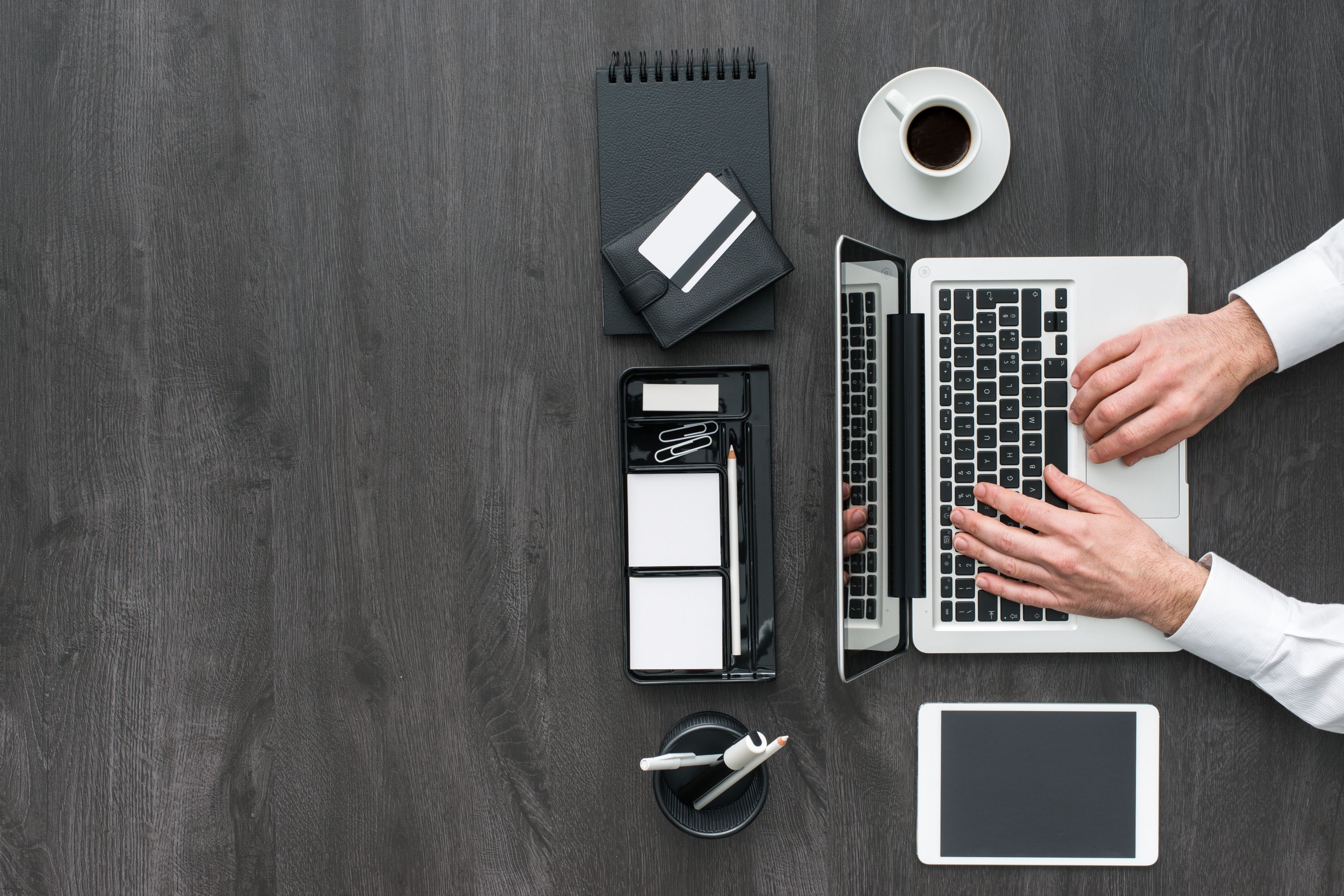
The most important shift you can make is finding your command position. This is the gold standard of desk placement. You must see the entrance of the room. Do not sit directly in the line of fire of the doorway. This placement gives you a sense of security.
You can see who is coming and going. It sounds like a small detail, but it changes your entire physiological state while you work.
- Place your desk so you have a solid wall behind you for support.
- Avoid sitting directly under heavy overhead shelves.
- Ensure there is a clear path to your desk so you don’t feel boxed in.
- Position your monitor so you aren’t fighting glare from a window.
If you are stuck in a cubicle, you have to get creative. You can use a small mirror on your monitor to see behind you.
This tricks your brain into feeling like it has eyes in the back of its head. It lowers your subconscious guard. The goal is to get rid of the friction. When you remove things that annoy your subconscious, you have more energy for the actual work.
Navigating the Challenges of Modern Open Offices
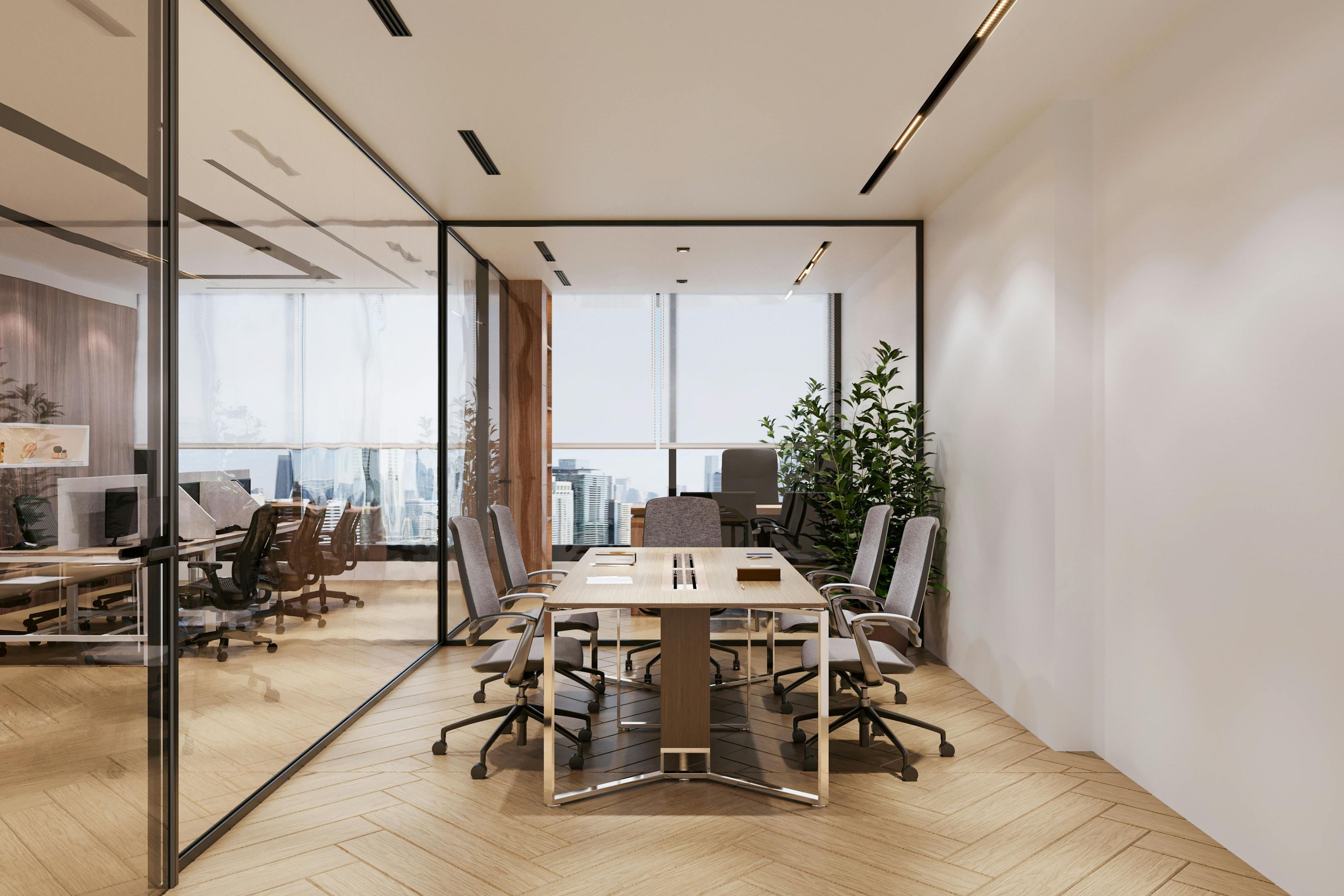
Open offices often act as major energy drains. They emphasize collaboration but usually create a “High Yang” environment. This means there is too much noise and movement.
It is a constant assault on your senses. For many of us, this explains why work feels so heavy. You try to focus while your brain picks up on every nearby conversation.
To fix this, you need to introduce pockets of stability. You can use the five elements as a balancing tool. You don’t need a fountain in the middle of the office. You just need to balance the cold, hard surfaces of a modern office. Grounding objects help settle the energy of a chaotic room.
Using the Five Elements for Balance
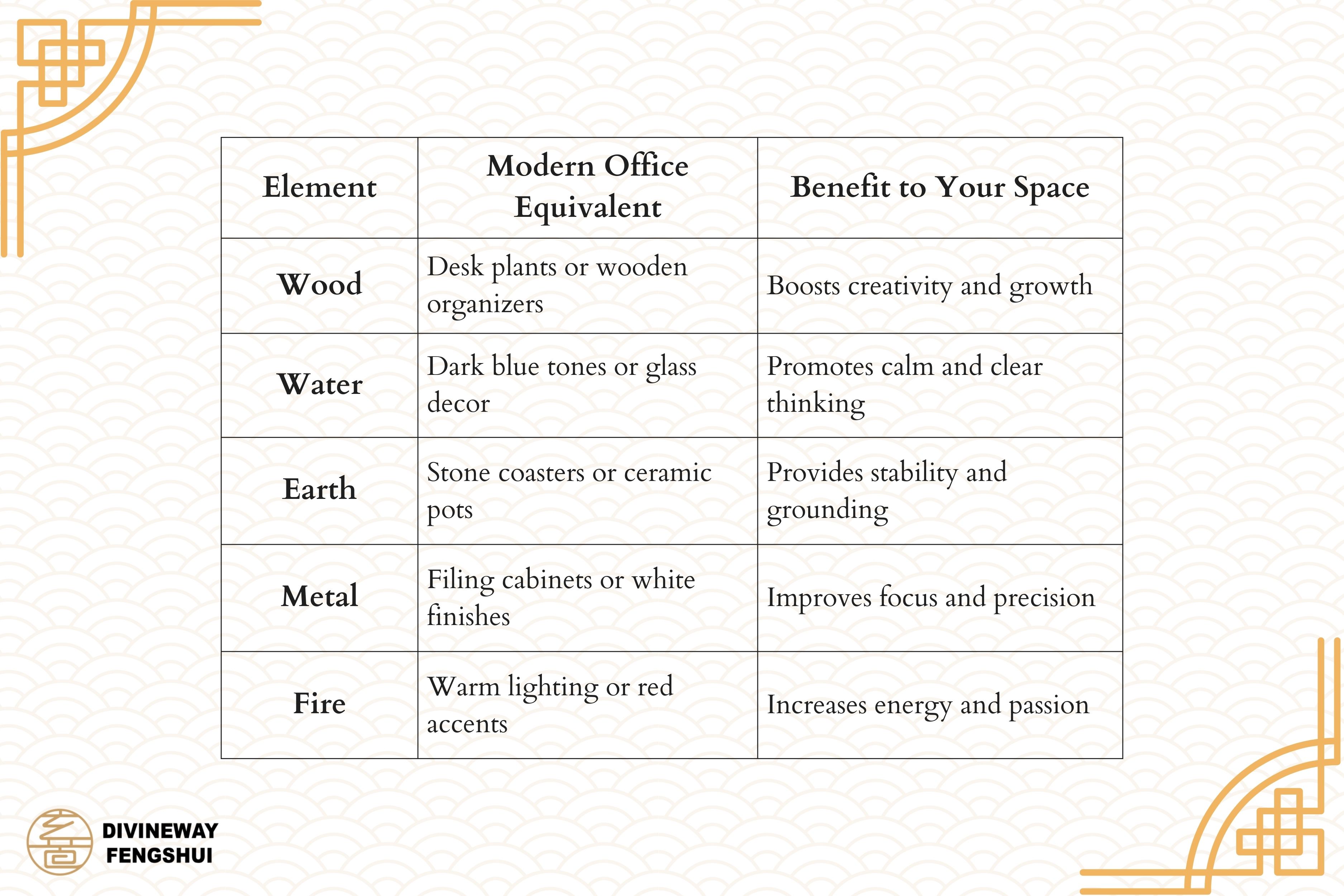
Using these elements is about creating a sensory balance. If your office is all glass and metal, it feels cold and clinical. Adding a plant or a wooden desk organizer provides warmth.
This makes the space feel more human. These aren’t just decorations. They are tools to modulate the energy of the room. They stop the office from feeling like a sterile lab.
Clearing the Invisible Clutter in Your Workspace
We talk a lot about physical clutter, but invisible clutter is just as draining. This includes poor lighting and bad air quality. It includes the stagnant feeling of a room that stays messy.
In geomancy, the entrance is the “mouth of qi.” This is the point where energy and opportunities enter your space. If boxes or trash cans block your desk, you create a clog in your workflow.
Think about how you feel when you walk into a cluttered shop. You probably want to leave immediately. The same logic applies to your workspace. If the first thing you see is a mess, your brain starts the day in a state of overwhelm.
Clearing the path to your desk is a psychological signal. It shows you are ready to receive new ideas and handle the day with ease.
It is also worth looking at your lighting. Harsh, flickering fluorescent lights contribute to headaches and eye strain. If you can, bring in a small desk lamp with a warm bulb. This creates a workspace within a workspace.
It helps you define your personal boundaries in a busy office. You take control of the small area you actually inhabit.
Small Tweaks for Big Results in Compact Offices
In a city where space is limited, we have to be smart. You don’t need a massive corner office to have good office feng shui. Smaller spaces are often easier to manage. You can see the impact of your changes instantly.
- Use vertical storage to keep your desk surface clear.
- Keep your cords and cables tucked away.
- Ensure your chair is at the right height.
- Add one item that genuinely makes you happy.
A lot of people think they need to overhaul everything at once. That is not the case. Start with one thing, like clearing your desk at the end of every day.
This simple ritual ensures you don’t start the morning with yesterday’s leftover stress. It gives you a clean slate. When the space feels fresh, your mind follows suit.
Aligning Your Space with Your Ambition

Your office should be a tool that helps you reach your goals. It shouldn’t be another obstacle you have to overcome. If you constantly adjust your seat or feel dread, listen to that feeling. Your body is telling you that the alignment is off.
Consulting with someone who understands these spatial dynamics gives you a fresh perspective. Sometimes we are too close to our own mess to see the solution.
A simple move of a desk can be the difference between a productive afternoon and a total mental shutdown. These changes create the right conditions so you can work with more ease.
Ultimately, you are looking for a sense of harmony. When your physical surroundings match your internal goals, everything feels a lot lighter.
You stop fighting the room and start focusing on the work. That is the real power of managing your space well. It gives you back the energy that the office was quietly stealing from you.
If you have tried everything and your workspace still feels like an uphill battle, look at the layout from a different angle. You deserve a space that leaves you feeling energized.
Taking the time to set it up right is an investment in your mental health. It supports your long-term career.
Related Posts



Have a question for us?
We welcome any question with no commitments. Master Louis Cheung will seek to clarify any doubts you may have.
“Master Louis Cheung has an approachable and comfortable personality along with competent skills. I can confidently recommend Master Louis Cheung to my friends. Thank you, Feng Shui Master Louis Cheung.”
 James H.
Senior Financial Analyst