

Feng Shui is more than just the placement of furniture and the design of your spaces.
Though some people turn to residential feng shui for good luck and harmony, it’s actually a cultural practice deeply embedded in Singapore.
As different spaces have different goals to target in terms of their design and layout, feng shui suggests appropriate approaches to different homes and businesses.
If you’re considering to consult a feng shui master for your residential or commercial spaces, it’s important to know how home consultations differ.
What Is Residential Feng Shui and How Is It Used in Singapore Homes?
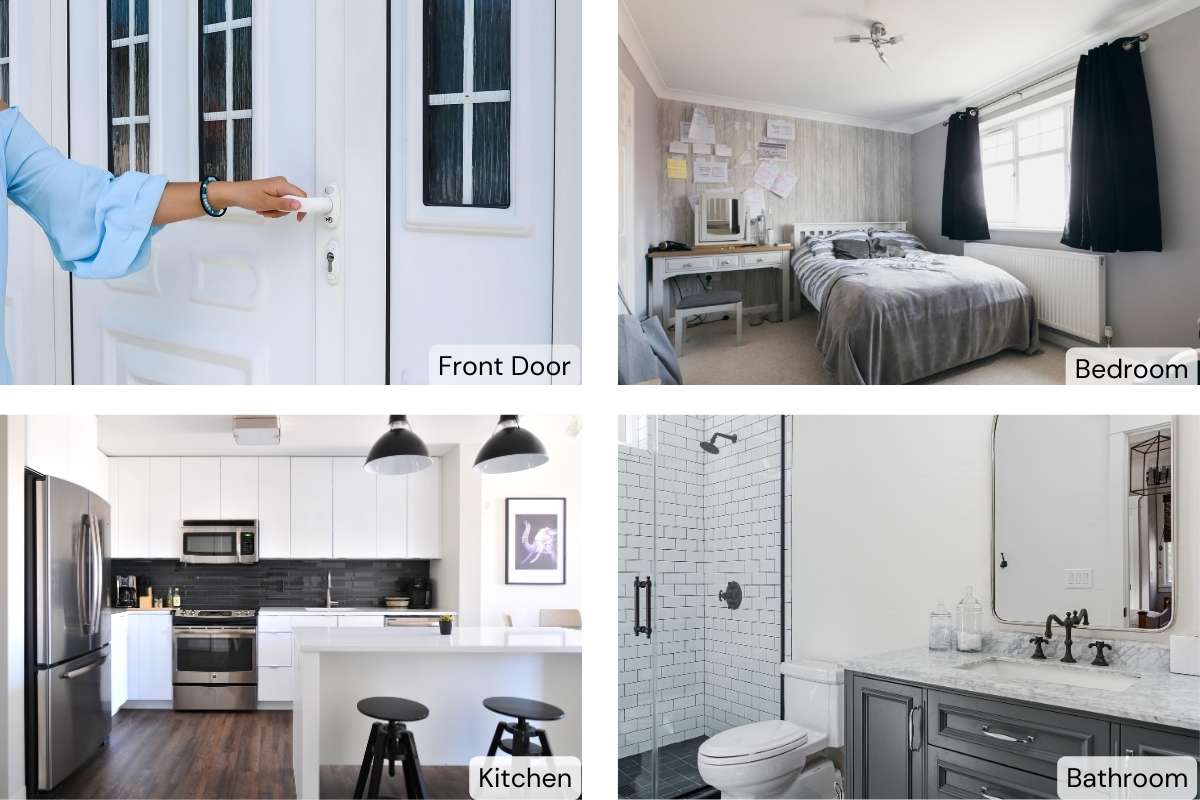
If you’re looking to harmonise the energy flow within your home to support your family’s well-being, relationships, and prosperity, residential feng shui is for you.
It is increasingly popular in Singapore, where homeowners—from high-rise HDB flats to landed property dwellers—consult feng shui masters to enhance family harmony, improve health, or have better luck in life.
Evaluates Qi Through Spaces
At its core, residential feng shui evaluates how qi (life energy) moves through a living space.
Home consultations for this start with the feng shui master taking a compass reading of the direction the house is facing.
Then assesses key areas, like bedroom, kitchen, bathroom, and main entrance (“mouth of chi”), which are spaces related to core aspects of life: wealth, rest, nourishment, and relationships.
In Singapore, densely populated HDB estates often experience design limitations, like awkwardly positioned doors, so a master might suggest furniture repositioning or redirecting energy through mirrors.
Another option is to place symbolic items—like plants or crystal spheres—to balance spaces with stagnant qi.
These subtle shifts can already provide significant changes, evident in how peaceful or “open” a home feels.
Consults BaZi for individual adjustments
Residential feng shui also adopts personalised adjustments to support traditional techniques, through BaZi—also known as the Four Pillars of Destiny—a type of birth chart.
Many Singaporeans also consult their BaZi, alongside feng shui, to make sure that home customisations are tailoured to individual energy needs.
This type of feng shui is all about creating a supportive and nurturing environment. All while aligning with the personal goals of the people in your home.
So, the master ensures that, whether it’s helping a child focus better in school or improving sleep quality in a shared bedroom, the home can be adjusted to what you personally need.
How Feng Shui differs in Commercial Spaces
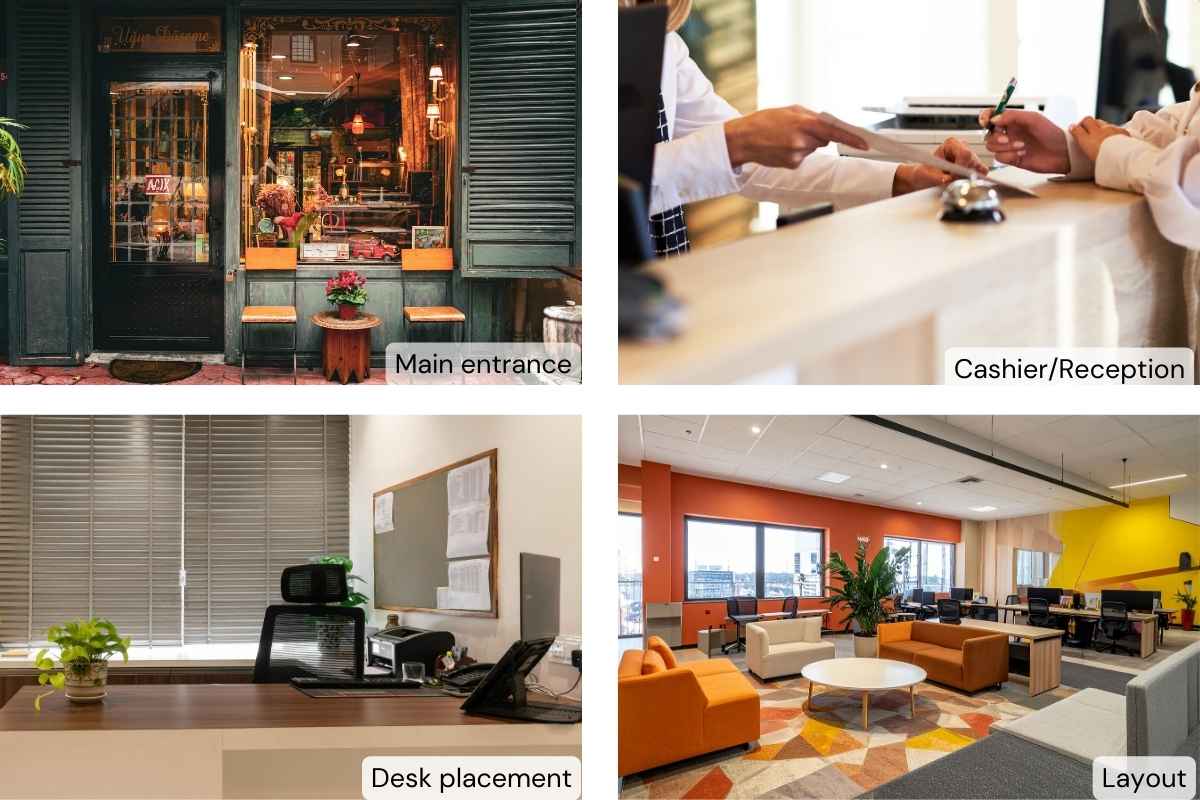
Commercial feng shui is all about business success: profits, productivity, and positive brand energy.
In Singapore’s competitive commercial landscape, many business owners turn to feng shui to gain an energetic edge.
This is because, whether you’re running a boutique in Bugis or an office in the CBD, commercial feng shui can help you attract clients and energise your staf—all while keeping your business flowing smoothly.
Layout Assessment
A typical commercial feng shui consultation starts with assessing the shop or office layout.
The main entrance remains a top priority, because it’s viewed as the gateway through which both customers and energy enter.
If a shop’s front door opens directly through to the back (a layout seen in many shophouses), it’s often considered a loss of wealth qi, as both energy and customers may “rush out.”
Adjustments could include energy flow redirection by adding partitions, plants, or decor.
Another key area among commercial spaces is the desk placement.
Business owners and key decision-makers are often advised to sit in a commanding position. This meant facing the door but not directly in line with it, with a solid wall behind them for support.
Additionally, the positioning of departments also matters. For example, sales teams or active cashiers should be placed in prosperous sectors that may help boost results.
Symbolic Feng Shui
Singapore businesses also lean into symbolic feng shui cures.
In fact, it’s common to see lucky plants or wealth bowls placed near entry points.
These kinds of symbol and object placements around the commercial space are said to attract positive qi to attract wealth and prosperity for the business.
Some business owners may also incorporate their personal BaZi chart or the Five Elements theory (wood, earth, metal, fire, and water) into their branding elements, which includes colours and logos.
Key Differences Between Residential Feng Shui and Commercial Feng Shui
Now that we’ve explored both types, you can now see how residential feng shui and commercial feng shui serve clearly different purposes, even if they use similar principles and the same evaluation techniques.
Particularly, one is concerned with nurturing personal well-being within your home, while the other is concerned with supporting businesses in professional environments.
To help you further understand the main difference between the two feng shui consultations, here’s an easy breakdown of comparison:
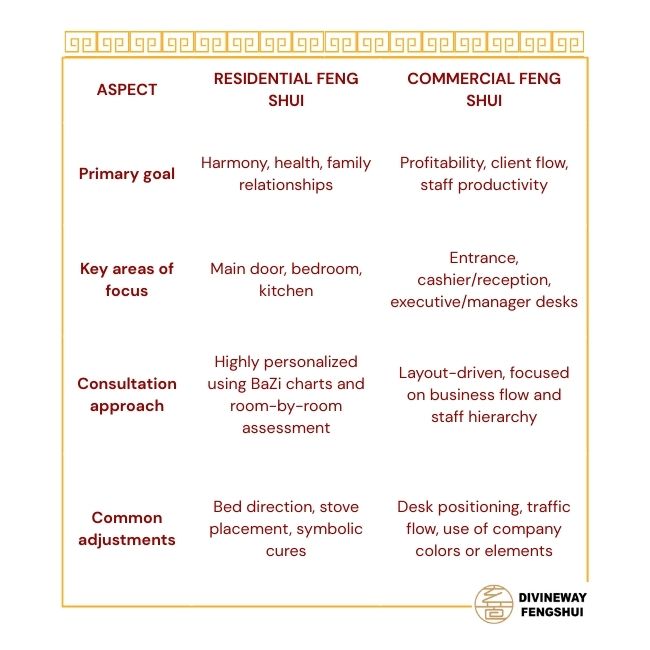
Key Areas of Focus
In residential feng shui, the primary attention goes to areas that deeply affect daily well-being. The commonly assessed areas for this are:
- the main door (where qi enters);
- bedrooms (where you rest and recharge); and
- kitchens (linked to nourishment and health).
Thus, poorly positioned furniture are adjusted to prevent disturbing the energy flow, which can affect the health or emotional stability of the occupants.
In Singapore, where houses generally have compact layouts, creative solutions to optimising limited spaces are needed.
On another note, commercial feng shui, the focus is now on how energy affects people and profits. Feng shui masters often evaluates three main areas to prevent stagnant zones which leads to loss of sales:
- Where customers enter and linger in the space (or door to purchase point paths);
- Where staff sit;
- Where the desk (command position) is placed.
Consultation Approach
First, residential feng shui consultations tend to be more personal and intuitive.
Feng shui masters often consider the BaZi of each household members to ensure that whatever they recommend is personalised.
This is especially needed for consultations focusing on health or relationships, among others.
The consultation then detailedly reviews the needed adjustments to each room of the house based on the needs, habits, and even life stages of the occupants.
Next, commercial consultations are more strategic.
Although, as mentioned earlier, some business owners consider their personal BaZi to personalise the assessments, majority often prioritise customer flow, staff hierarchy, and spatial efficiency.
In other cases, some masters even work together with architects and interior designers to optimise planning right from the layout of the space, especially when such spaces undergo new office fit-outs or retail innovations.
Common Adjustments
The adjustments for residential spaces are often subtle and symbolic.
For example, plants are placed in stagnant corners to activate energy, while mirrors are used to reflect light, which can then improve qi circulation.
Additionally, rooms may also be adjusted based on their paint colours and lighting to be adapted to the supporting needs of each household member.
Conversely, commercial spaces often make adjustments that are much more visible and layout-based.
For example, the cashier may be relocated for better wealth retention, while the owner’s desk may be shifted to face a more favourable direction.
In Singapore, symbolic cures for shops or offices are usually wealth symbols. These can be gold toads or water features near the entrance.
Ultimately, these adjustments are all rooted to invite prosperity and retain income.
Emotional Lens
Another major difference that’s not listed above, but is also a crucial consideration if you’re considering area consultation, is the emotional lens.
Between the two spaces, home feng shui is more intimate and personal.
This indicates that the consultation and approaches to the suggested adjustments are all rooted in how the people living in the house feel inside their space.
This includes what their personal goals are for themselves and the people they are living with.
On the other hand, commercial feng shui is much more professional.
In fact, as business owners seek this practice as a strategic tool to drive their businesses into success, spaces are treated as high-performance environments.
As such, approaches to adjust these spaces focus on supporting growth and productivity, with the business goals as the main foundation of consideration.
Despite these contrasts, both practices aim for the same outcome: to create an environment that works with you, not against you.
Final Thoughts: Choosing the Right Feng Shui Approach for Your Space
In a nutshell, residential feng shui focuses on nurturing family well-being and personal relationships. Commercial feng shui, on the other hand, focuses on productivity and financial success.
So, whether you live in a cosy HDB flat or run a retail shop in Orchard, a feng shui master can help you choose the right feng shui approach for your space.
Understanding the key differences between residential and commercial feng shui is already one big step to creating a supportive and energetically balanced environment tailored to your life or business.


Have a question for us?
We welcome any question with no commitments. Master Louis Cheung will seek to clarify any doubts you may have.
“Master Louis Cheung has an approachable and comfortable personality along with competent skills. I can confidently recommend Master Louis Cheung to my friends. Thank you, Feng Shui Master Louis Cheung.”
 James H.
Senior Financial Analyst