

The 5 elements of feng shui—Wood, Fire, Earth, Metal, and Water—are used as the building blocks of a balanced space. Each element represents different energies that, together, create harmonious qi (or “chi”) flow.
Understanding these elements helps you arrange your home so that no single energy overwhelms or is missing. In feng shui, having all five elements in balance is essential for a comfortable, vibrant environment.
Understanding the 5 Elements of Feng Shui
Origins of the Five Element Theory
The five-element concept (Wu Xing, “five actions”) dates back over 2,000 years to ancient China. It appears in Chinese medicine, astrology, martial arts, and feng shui.
The theory describes how phenomena interact in cycles of generation and control. This framework helps feng shui practitioners see how the energies (elements) in a room influence each other and the people there.
The Importance of Balance in Feng Shui
Feng shui emphasizes balance and harmony. Ideally, a room should include all five elements so that no single element dominates. Balancing the five elements can make people feel good and even reluctant to leave the space.
Practically, this means decorating different areas according to the bagua (energy map) and each element’s associations. For example, in a home’s layout the “Fire” sector might feature red accents or bright lighting, while the element of Wood uses plants or wooden furniture.
Cycles of Interaction: Productive and Controlling

These cycles show how the elements naturally support and restrain each other. When applying feng shui, adjust décor accordingly: if one element is too strong, introduce its controlling partner; if one is weak, add its generating (nourishing) partner. This way, the energy can circulate smoothly rather than become stagnant or chaotic.
The 5 Elements in Feng Shui

Below are each element’s key qualities and suggestions for using it in décor. Choose colors, shapes, and items that symbolize each element to bring that energy into your space.
Wood Element – Growth and Vitality
Wood symbolizes growth, flexibility, and creativity. It’s linked with spring and the east (often southeast), reflecting new beginnings. Associated colors are green (and brown). Vertical or columnar shapes (like trees) also express Wood’s upward energy.
To add Wood energy, bring in living plants or wooden objects. For example, a healthy houseplant or fresh flowers immediately introduce Wood’s life force.
Wooden furniture, bamboo décor, and green textiles (pillows or art) also work. These elements invite freshness and inspiration into a room, helping the space feel vibrant and alive.
Fire Element – Passion and Energy
Passion represents fire, so does excitement and transformation. It’s tied to the south and summer, with bright red (and orange or purple) as its main color. Pointed or triangular shapes (like flames) symbolize Fire’s dynamic quality.
You can add Fire with color and light. Candles, a fireplace, or bright lamps bring literal warmth and illumination into a space. Red accents—such as a rug, wall paint, or pillows—immediately inject Fire’s spirited energy.
These touches make a room feel lively and energized. Use Fire elements in moderation, as too much intense light or red can feel overwhelming.
Earth Element – Stability and Nourishment
Earth brings stability, grounding, and nourishment. It’s associated with the center of the home (and sometimes the northeast/southwest areas) and with late summer or transitional seasons.
Earth’s colors are warm yellows, beiges, browns, or terracotta. Square or flat shapes (tiles, bricks) convey Earth’s solid, nurturing quality.
To incorporate Earth, use natural, grounding materials. Earth-toned walls, rugs or blankets (yellow, ochre, brown) instantly create a calming vibe. Decorative stones, pottery, ceramics, or crystals (placed on shelves or tables) physically bring Earth energy into a room.
Even comfortable, cozy furnishings (a soft rug or cushioned chair) feel earthy. These features help a space feel anchored and peaceful.
Metal Element – Clarity and Precision
Metal symbolizes clarity, focus, and efficiency. It’s linked to the west (and northwest) and autumn. Metal’s colors include whites, grays, and metallics like silver, gold or brass. Circular or oval shapes (coins, rings, arches) express Metal’s harmonious quality.
To introduce Metal, add metal objects and round shapes. For example, metal furniture or accents (a brass lamp, iron frame, silver vase) bring actual Metal energy.
These items also reflect light, adding brightness. A white or gray color scheme highlights Metal’s clean, crisp feel. Round mirrors, clocks, or metal decor echo Metal’s shapes. Metal elements sharpen a room’s energy, encouraging order and precision.
Water Element – Flow and Wisdom
Water represents calmness, intuition, and flexibility. It’s tied to the north and winter. Typical Water colors are deep blues and black. Wavy or flowing shapes (like rivers) mirror water’s movement.
You can add Water with actual water features or their symbols. A small indoor fountain, aquarium, or even a bowl of water brings Water’s soothing presence (the gentle sound of water is very relaxing).
If that’s not possible, use color and pattern: navy or black furnishings or curtains, or flowing, wave-patterned fabrics, evoke Water. Mirrors also function as a feng shui water symbol due to their reflective surface.
Water elements encourage a tranquil, meditative atmosphere where energy can “flow.”
Balancing the Elements in Your Space
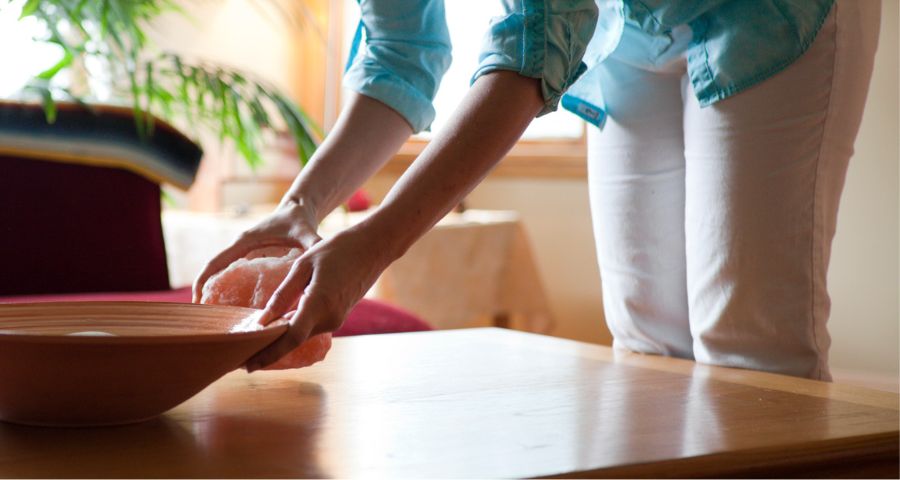
Assessing and Adjusting Your Elemental Mix
Creating feng shui harmony involves balancing all elements in each room. Take stock of which elements are strong or missing.
For example, a bedroom with lots of green plants and brown wood has ample Wood and Earth energy, but might lack Metal or Water.
If an element is missing, introduce something to represent it (a plant adds Wood, a candle adds Fire, a mirror adds Water, etc.). If one element feels too strong, soften it by adding its controlling element (for instance, too much Fire can be cooled with Water).
Experienced feng shui practitioners note that when all five elements are balanced, the space “feels wonderful” and harmonious. By contrast, imbalance can make a room feel chaotic or stagnant.
Small adjustments—like moving a plant or hanging a picture—can restore the energy balance.
Tips for Harmonising Your Home with Five Elements
By thoughtfully mixing elements through decor, color, and shape, you create a home that looks harmonious and feels nurturing.
Final Thoughts

The five feng shui elements are a time-tested framework for designing spaces that feel balanced and alive.
By recognizing each element’s qualities and blending them in your decor, you enhance the positive qi in your home. For example, adding a healthy plant or a lit candle brings Wood and Fire energy, while ceramics or stones add Earth, metal objects add Metal energy, and a fountain or mirror brings Water.
Using all five thoughtfully creates a supportive, harmonious atmosphere. Feng shui is flexible, so apply these ideas in ways that feel right to you. At the same time, seeking guidance from a feng shui master can ensure the elements are applied in a way that aligns with your home’s unique energy and layout.
Over time, you’ll discover the right mix of Wood, Fire, Earth, Metal, and Water that makes your home feel vibrant, nurturing and full of positive energy.
Use this guide as a starting point to experiment with the elements of feng shui in your home.


Have a question for us?
We welcome any question with no commitments. Master Louis Cheung will seek to clarify any doubts you may have.
“Master Louis Cheung has an approachable and comfortable personality along with competent skills. I can confidently recommend Master Louis Cheung to my friends. Thank you, Feng Shui Master Louis Cheung.”
 James H.
Senior Financial Analyst