

When hearing the term “feng shui reading”, people often think about charts, compass directions, and symbolic objects first.
However, a meaningful feng shui consultation is actually shaped by two key influences working together: the space being assessed and the personal elements.
This relationship is especially important in Singapore, where homes are often compact and with fixed layouts—coupled with the fast-paced lifestyle.
Naturally, a reading for a high-rise HDB flat will differ from a landed property. Just as feng shui advice will differ from one person to another, despite living in one home.
So, let’s explore how space and personal elements really influence feng shui consultations.
What Is a Feng Shui Reading and How Does It Work?
Feng shui readings assess the energy flow (known as “qi”) within a space, and how that energy interacts with the people living or working in it.
A feng shui master or consultant doing the reading does not predict future events.
Rather, they focus on identifying patterns, analysing imbalances, and the opportunities for improvement within a space.
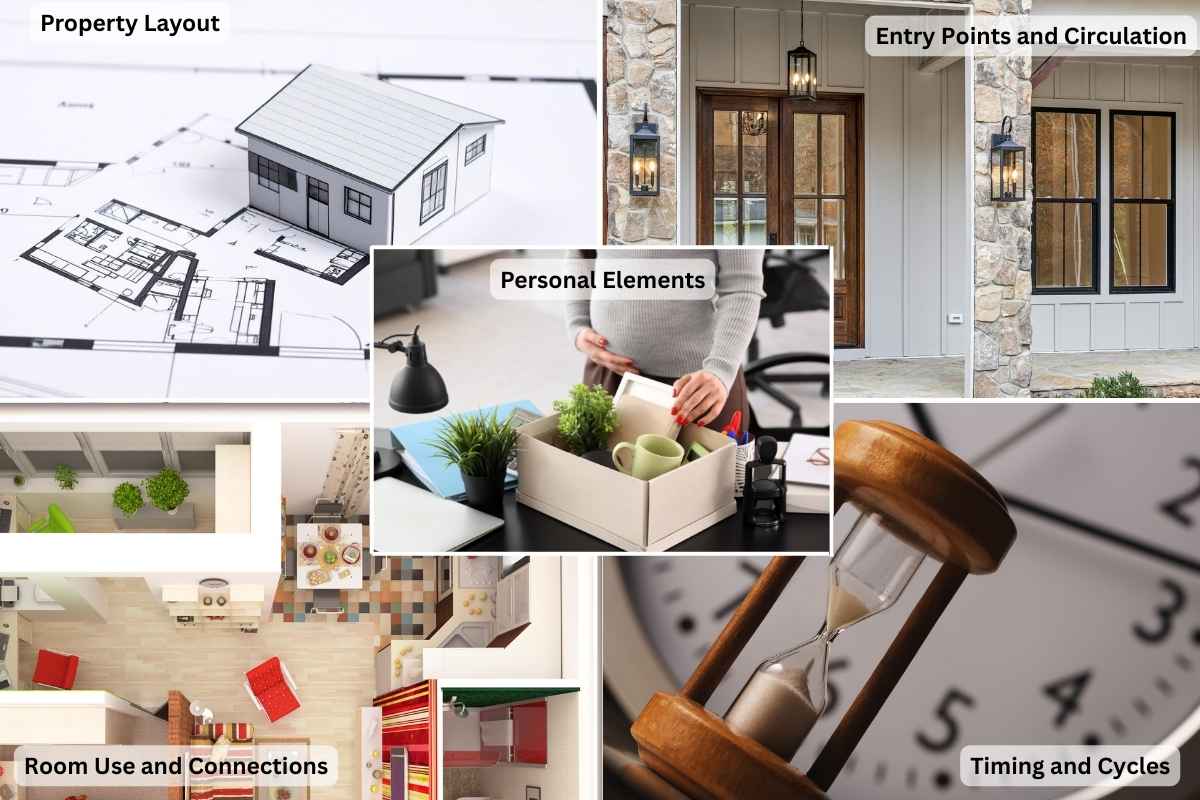
During a consultation, a practitioner typically looks at:
- The layout and orientation of the property
- How rooms are used and connected
- Entry points, windows, and circulation paths
- Time-based influences and cycles
- Personal elements
What we can see from this list is that the foundation of professional feng shui readings lies in their contextual nature.
This means that recommendations are not blindly applied. Rather, they are adapted to the actual conditions of the space, and the needs or goals of the people using it.
Additionally, to align the environmental recommendations with personal tendencies, personal information is often considered. This includes birth data as represented in a BaZi chart (“Four Pillars of Destiny” chart).
By considering this, the space can be better adjusted to support the person using it.
As such, the outcome of a feng shui reading is not just one fixed answer. Rather, a set of insights that effectively aligns space, timing, and personal energy.
Why Space Matters in a Feng Shui Reading
In any feng shui reading, space or the physical environment becomes the foundation of the analysis.
Why?
Spatial details influence how energy moves, settles, or becomes stagnant. In turn, this affects the comfort, emotional balance, focus, and even control.
Attention is then often given to four key aspects:
- How energy enters the home.
- How qi circulates around the space.
- Whether there are areas with blocked or rushed energies.
- Whether open and enclosed spaces are balanced.
To give you an example, energy flow often becomes restricted when an area is cluttered or poorly organised. In turn, a person using that space may feel restless or fatigued.
In comparison, well-organised spaces allow a calmer and more stable environment.
On another note, some areas in a home carry greater significance in a feng shui reading, which are often those that influence daily lives. This includes the main door, bedrooms, kitchen, and work areas.
So, when these crucial areas are misaligned, or even underused, the effects can ripple outward. To an extent, it can then influence multiple aspects of life.
In sum, space is a crucial aspect of feng shui consultations. Your environment can either support or work against you.
How Physical Space Influences Feng Shui Reading Outcomes
In Singapore, spatial contexts are always unique.
Most people live in apartments or HDB flats with limited floor areas or fixed layouts.
So feng shui readings in Singapore often focus on refinement of spaces through practical adjustments, rather than making drastic changes.
To give you an idea, if your main door directly faces another unit, the energy may move too quickly through the space. A feng shui practitioner can suggest ways to slow or retain energy. This can include visual buffers or interior layout adjustments.
Additionally, Singapore often has a vertical living orientation, which also affects energy dynamics.
Particularly, those on higher floors have better light and airflow. However, they may need to create balance through grounding elements.
All in all, the nuances within a physical space contribute to the variations of energy flows.
A feng shui reading then greatly considers this, so their recommendations can remain realistic and effective for you.
The Role of Personal Elements in a Feng Shui Reading
After talking about space, let’s now move on to personal elements.
While space refers to the physical context, personal elements are commonly based on the person’s BaZi chart. This then reflects their natural tendencies and energetic balance.
Why is it important to consider personal elements, then?
By knowing this information, a feng shui consultant can better understand why:
- the same space affects people differently;
- certain recommendations resonate more with one person;
- timing matters when making adjustments.
For example, you may benefit more from a calmer environment to support rest and recovery.
However, one of your family members may need more stimulation and movement to support growth and productivity.
This means that while the physical space remains unchanged, the feng shui reading shifts based on your personal needs and goals.
Additionally, personal elements are even more crucial for shared households.
Remember, a feng shui reading aims to create harmony.
This means that solutions must be balanced in a way that would support the collective well-being of those sharing a space, while still respecting their individual differences.
How Personal Energy Shapes the Interpretation of a Feng Shui Reading
Beyond charts and layouts, personal energy and mindset influence how a feng shui reading is received and applied.
In this regard, a feng shui reading is not just the assessment of a space or the energy within it.
Rather, it is a collaborative process between the consultant and the client, who should be clear with their emotional state, intention, and openness.
Why?
Because these factors influence how feng shui insights are understood, how relevant the recommendations will be, and how consistently the changes are implemented.
While these shifts don’t change the principles of feng shui, they shape how advice is interpreted.
To give you an example, a feng shui reading done during a growth phase may highlight activation and movement. While a consultation during a transitional period may highlight stability and grounding.
Additionally, consistency through daily habits and decisions affects the support outcomes of the environmental adjustments.
Thus, personal energy, which reflects an individual’s tendencies, will still affect the long-term benefits of the practitioner’s advice even after the reading session.
Balancing Space and Personal Elements in a Feng Shui Reading

Now that we better understand how space and personal elements influence feng shui reading outcomes, we can see why finding the right balance between these two is crucial.
This means that to have the most effective reading session, you and the practitioner must focus on both contexts to gain complete insights.
Specifically, aligning environmental and personal energies means that recommendations must be adapted to real spatial conditions, while also prioritising areas for personal needs.
In turn, you must accept that change is a gradual process, and not an instant phenomenon after just one reading.
Nonetheless, feng shui readings may involve some compromise.
For example, a space with limited area may not allow ideal placements of furniture or symbols. To mitigate this, personal elements can be used to refine the space.
On another hand, an area may be energetically strong, so personal timing will then determine when the suggested changes should be made.
In Singapore, these changes are especially relevant due to the commonly shared home settings with fixed layouts.
Thus, an effective and thoughtful feng shui reading would be one that recognises these realities and works within these nuances.
All to maximise benefits according to your needs and goals.
Final Thoughts
A feng shui reading is most effective when it considers both where you live and who you are.
While space influences the energy flow within a physical area, personal elements shape how that particular energy is experienced and applied.
For Singapore’s urban environment, considering these two would lead to sustainable, grounded, and practical guidance.
One that works well with your home, your living situation, and your lifestyle.
If you’re considering a feng shui consultation, a personalised session can help you understand how your space and personal elements interact.
With thoughtful guidance from a practitioner, even small adjustments can support greater balance and harmony in daily life.


Have a question for us?
We welcome any question with no commitments. Master Louis Cheung will seek to clarify any doubts you may have.
“Master Louis Cheung has an approachable and comfortable personality along with competent skills. I can confidently recommend Master Louis Cheung to my friends. Thank you, Feng Shui Master Louis Cheung.”
 James H.
Senior Financial Analyst